
How to pull a perfect espresso shot
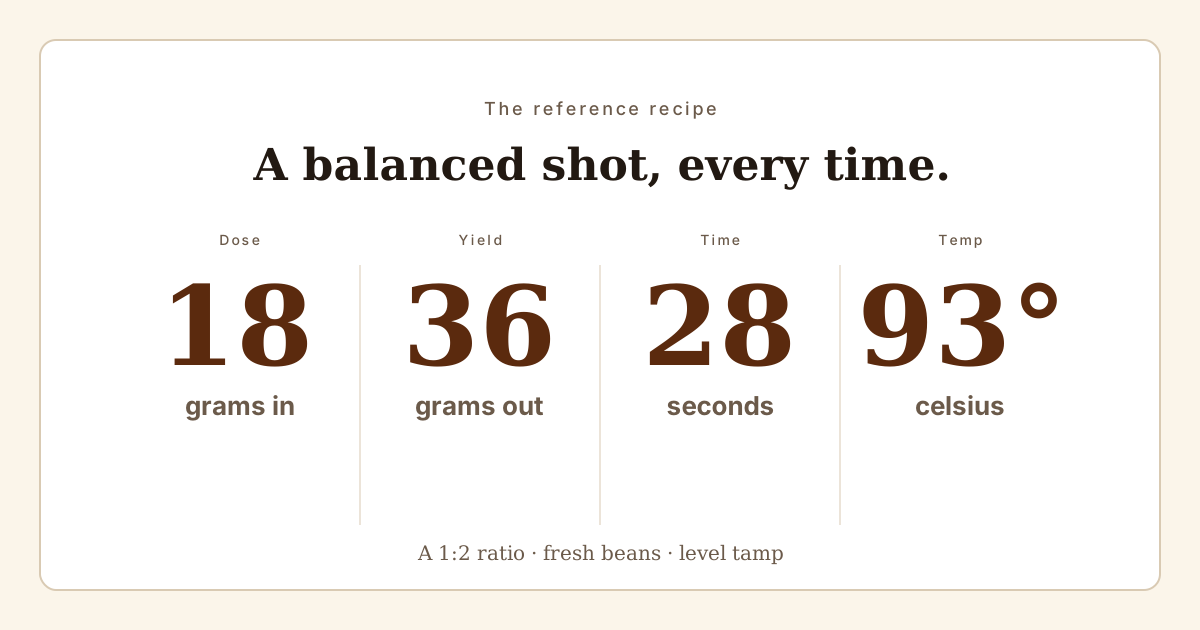
A repeatable routine for balanced espresso: 18 in, 36 out, 25–30 seconds, fresh beans, level tamp. Plus how to read the shot and fix it when it's off.
What you'll need
- Fresh whole-bean espresso : Roasted within the last 2–4 weeks. Single origin or blend, both work. Pre-ground does not.
- A 0.1 g scale : Small enough to fit under the portafilter spout. The single most important accessory in espresso.
- A real grinder : Burr, not blade. Entry-level: Baratza Encore ESP. Step up: Eureka Mignon Specialita or Niche Zero.
- A WDT tool : Thin needles (0.3–0.4 mm). Fixes 80% of channeling problems for $30. The highest-ROI accessory there is.
- A bottomless (naked) portafilter : Optional but transformative. Shows you channeling and prep problems no other tool can.
- A precision basket : IMS or VST. Replace pressurized baskets immediately if your machine shipped with one.
TL;DR
A good shot is a repeatable shot. Pull 18 g in, 36 g out, in 25 to 30 seconds at 93°C, with fresh beans (2 to 4 weeks off roast), a level tamp, and a grinder dialed to hit that window. Taste it. If it’s sour, grind finer. If it’s bitter, grind coarser. “Perfect” isn’t a single recipe; it’s a feedback loop you can run in under 90 seconds.
What a perfect shot actually is
Forget the marketing version (thick crema, tiger stripes, dramatic mouse-tail pour). Those are side effects, not goals. A perfect shot is one where:
- The cup tastes balanced. Sweet up front, no sour bite, no bitter finish. The bean’s character (chocolate, citrus, stone fruit, whatever the bag promised) is legible.
- The pull was repeatable. You can make it again tomorrow with the same numbers.
- The numbers were in a sensible window. 1:2 ratio, 25 to 30 seconds, 92 to 94°C brew temperature.
The order matters. Taste comes first. A 22-second shot that tastes balanced beats a 28-second shot that tastes flat. The window is a starting point; the tongue is the verdict.
What it looks like when you get this wrong: chasing crema. Crema is mostly a function of bean freshness and roast level. Dark, fresh robusta blends produce mountains of it and often taste like ash. Light single origins produce thin crema and can taste extraordinary. Stop optimizing for the picture.
The six variables, in priority order
You have six knobs. Most beginners fiddle with all of them at once and learn nothing. Lock them in this order:
1. Fresh beans
Roasted within the last 2 to 4 weeks. Less than 5 days is too fresh (excessive degassing, gushing shots, sour cup). More than 6 weeks is too old (flat, papery, sometimes weirdly sour as oils oxidize). Whole bean only. Pre-ground is stale within hours of grinding; you cannot pull a perfect shot from pre-ground coffee, full stop.
Failure mode: you dialed in beautifully on Tuesday, the same recipe tastes muddy on Friday. Check the roast date. Beans drift. For more on picking and storing beans, see how to choose espresso beans.
2. Dose
Weigh every dose to 0.1 g. Match the basket: most 58 mm doubles are 18 g, Breville 54 mm doubles are 18 to 19 g, smaller singles run 7 to 9 g. Don’t try to fit 20 g in an 18 g basket “for more flavor”; the puck will hit the shower screen, channel, and gush.
Failure mode: shots are wildly inconsistent day to day. You’re eyeballing the dose. Buy a 0.1 g scale before you upgrade anything else.
3. Ratio (yield)
1:2 is the default. 18 g in, 36 g out. For light roasts, some people stretch to 1:2.5 or 1:3 (a “lungo”) to pull more sweetness; for dark roasts, 1:1.5 (“ristretto”) concentrates body. Start at 1:2 and only deviate once the 1:2 cup is clean.
Weigh the liquid in the cup, not the volume. Crema lies; a “2 oz” pour can be anywhere from 28 to 50 g of actual espresso.
4. Grind
The grind is your time control. Finer = slower flow, more extraction. Coarser = faster flow, less extraction. With dose and yield locked, you adjust grind until the shot times in the 25 to 30 second window.
A single notch on a stepped grinder is usually enough to move a shot 2 to 5 seconds. Purge 1 to 2 g of beans after every adjustment; the old grind is still in the chute and will skew the next shot.
The iterative process for finding the right grind setting on a new bag of beans is covered separately in how to dial in espresso. This guide assumes you’ve already landed on a grind that hits the window.
5. Distribution and tamp
After grinding into the basket: tap to settle, distribute (a WDT tool with thin needles is the single highest-ROI accessory in espresso, around $30), then tamp level.
Tamp pressure barely matters. 15 lb, 30 lb, doesn’t change the shot. Tamp angle matters enormously. A 2° tilt creates a fast side and a slow side. Water races down the fast side, the slow side stays under-extracted, the cup tastes simultaneously sour and bitter and you’ll think the recipe is broken.
Failure mode you can see: pull a shot through a bottomless portafilter. If the stream comes out of one spot first, or sprays sideways, you channeled. Fix the prep, not the recipe.
6. Temperature
92 to 94°C (197 to 201°F) at the puck. If your machine has PID, set it and forget it. If it doesn’t (Gaggia Classic, older Silvia), learn the “temperature surf”: flush a few seconds of water through the group, wait 15 to 30 seconds for the boiler to recover, then pull.
Higher temp extracts more (good for light roasts, risky for dark). Lower temp extracts less (good for dark roasts, often dull for light). Don’t touch temperature until grind and dose are dialed.
The 90-second routine
Once you’ve used this for a week, it becomes muscle memory:
- Pull the portafilter, knock the old puck, wipe the basket dry with a microfiber.
- Place portafilter on the scale, tare, grind directly into it. Brush any clumps. Tap the side twice to settle.
- Weigh. Adjust to target dose ± 0.1 g.
- WDT for 5 seconds: thin needles, full depth, gentle circles.
- Tamp once, straight down, until the puck stops compressing. Lift straight up.
- Quick wipe of the basket rim, lock into the group immediately. Don’t let the puck sit dry for more than 10 seconds; it dehydrates and channels.
- Cup on scale under the spout, tare, start brew and timer together.
- Stop at target yield. Note the time.
- Swirl the cup, wait 30 seconds, taste.
The single biggest workflow improvement most beginners can make is locking the portafilter in the moment prep finishes, not after a leisurely countertop tidy. Hot group head + dry puck = channeling.
Reading the shot
In the cup:
- Sour, thin, watery, finishes fast. Under-extracted. Grind finer. Most common beginner shot.
- Bitter, harsh, ashy, finishes slow and dry. Over-extracted. Grind coarser. Second most common.
- Sour AND bitter at the same time. You channeled. The recipe isn’t the problem. Re-do the prep.
- Flat, dull, “just coffee,” no character. Often a temperature or freshness problem, not a grind problem. Check roast date first.
- Balanced, sweet, the bag’s tasting notes are legible. Done. Write the grind setting on the bag.
In the stream (bottomless portafilter):
- Even, honey-colored, slowly tightening to a single stream around second 8 to 12. Good prep, good extraction.
- Pale stream from one hole, dark from others. Channeled.
- Spritzers, side-jets, fast jets that disappear. Channeled.
- No flow for 8+ seconds, then a sudden gush. Grind is too fine or dose is too high, and the puck failed.
Common mistakes
Chasing the window before tasting. Hitting 27 seconds with a sour cup means you have a sour 27-second shot. Time is a guide. Taste is the answer.
Adjusting two variables at once. Grind finer AND dose up AND lower the temp, then wonder which one fixed (or broke) it. Move one knob, pull one shot, taste, move the next.
Buying expensive accessories before fixing freshness. A $200 puck screen will not save 8-week-old grocery-store beans. Fresh beans first, then technique, then toys.
Ignoring the grinder. A $1,500 machine paired with a $50 grinder pulls worse shots than a $400 machine with a $400 grinder. Particle size distribution is set by the grinder; the machine can only work with what it’s handed.
Treating “perfect” as a destination. Beans change as the bag ages. Humidity changes grind behavior. The “perfect” shot from Monday will need a quarter-notch tweak by Thursday. Re-dial as you go; don’t get attached.
Pre-infusion as a fix-everything. Pre-infusion (a low-pressure soak before full pressure) helps with light roasts and uneven pucks, but it’s not a substitute for good prep. If you’re relying on pre-infusion to mask channeling, the shot will still taste off.
Troubleshooting
My shot tastes fine but the time is “wrong” (e.g. 22 seconds or 35 seconds). Trust the cup. The 25 to 30 second window is a heuristic that works for most beans, but light roasts often shine at 32 to 40 seconds and some dark blends are best at 20 to 22. If it tastes balanced, lock the grind. Write the actual time on the bag for next session.
Every shot gushes no matter how fine I grind. Either your basket is pressurized (perforated insert; pull it out and check), your portafilter doesn’t seal (worn group gasket), or you’re channeling on every shot. Pressurized baskets are the most common cause on entry-level machines and they cannot pull real espresso. Replace with a precision basket (IMS, VST, around $30).
Every shot chokes (no flow, gauge pins at 12+ bar). Grind is too fine, or dose is too high, or both. Coarsen 2 to 3 notches and re-weigh the dose. If it still chokes on a coarse setting, your puck is hitting the shower screen; reduce dose by 1 g.
The first shot of the day is always off, the second is fine. Group head wasn’t fully heated. Most home machines lie about being “ready.” Flush 4 to 6 oz of water through the group and let the machine sit another 5 to 10 minutes after the ready light comes on. Pre-heat the portafilter too; lock it in empty while the machine warms.
I dialed in perfectly yesterday, today the same recipe is sour and fast. Beans degassed further, humidity dropped, or the grinder drifted. Grind one notch finer and re-pull. This is normal; recipes drift over a bag’s life. The dial-in is a moving target, not a fixed coordinate. The deep dive on diagnosing and fixing sour shots specifically is in why is my espresso sour.
Bottomless portafilter shows even flow but the cup still tastes sour. Under-extraction without channeling. Grind finer, extend the yield slightly (try 1:2.2), or raise brew temp 1°C. In that order.
I can’t tell if a shot is sour or bitter. Common at the start. Drink the shot side by side with a known reference (a cafe shot, or a pour-over of the same beans). Sour is sharp at the front of the tongue and makes you wince like lemon. Bitter is dry and lingering at the back of the tongue like overbrewed black tea. Once you’ve isolated each, you won’t lose the distinction.
Frequently asked
What's the single most important thing for a good shot?
Fresh beans, weighed dose, and a level tamp. In that order. A $5,000 machine with stale beans pulls worse shots than a Gaggia Classic with last week's roast. Beginners almost always under-invest in freshness and over-invest in gear.
Do I really need a scale? Can't I time it or eyeball it?
No. Volume is unreliable (crema makes a 30 g pour look like 50 g), and timing without weight tells you nothing because dose varies. A 0.1 g scale is $20 to $40 and turns espresso from guesswork into a recipe. Buy it before any other accessory.
Why is my shot sour and bitter at the same time?
You channeled. Water found a fast path through the puck (over-extracting that path, tasting bitter) while the rest stayed under-extracted (tasting sour). The recipe isn't wrong; the prep is. Improve distribution (WDT) and tamp level, then re-pull before changing grind.
Should I use pre-infusion?
If your machine has it, yes, especially on light roasts. A 5 to 10 second low-pressure soak before full pressure helps water saturate the puck evenly and reduces channeling. It's not a fix for bad prep, but it makes good prep more forgiving.
How long until I can pull good shots consistently?
Two to four weeks of daily pulling, assuming you're weighing everything and tasting deliberately. The first week is humbling regardless of gear. By week three, dialing a new bean in three shots becomes normal. Plateau breakthroughs usually come from a bottomless portafilter, a WDT tool, or a grinder upgrade, in that order.
Is 9 bar pressure important?
9 bar is the convention but not sacred. Modern pressure-profiling machines pull excellent shots at 6 to 7 bar. For fixed-pressure home machines, 9 bar is fine; don't worry about it unless your machine is clearly over (10+ bar shows on the gauge under flow), in which case a $20 OPV adjustment fixes it on most consumer machines.