
Espresso troubleshooting: a decision tree
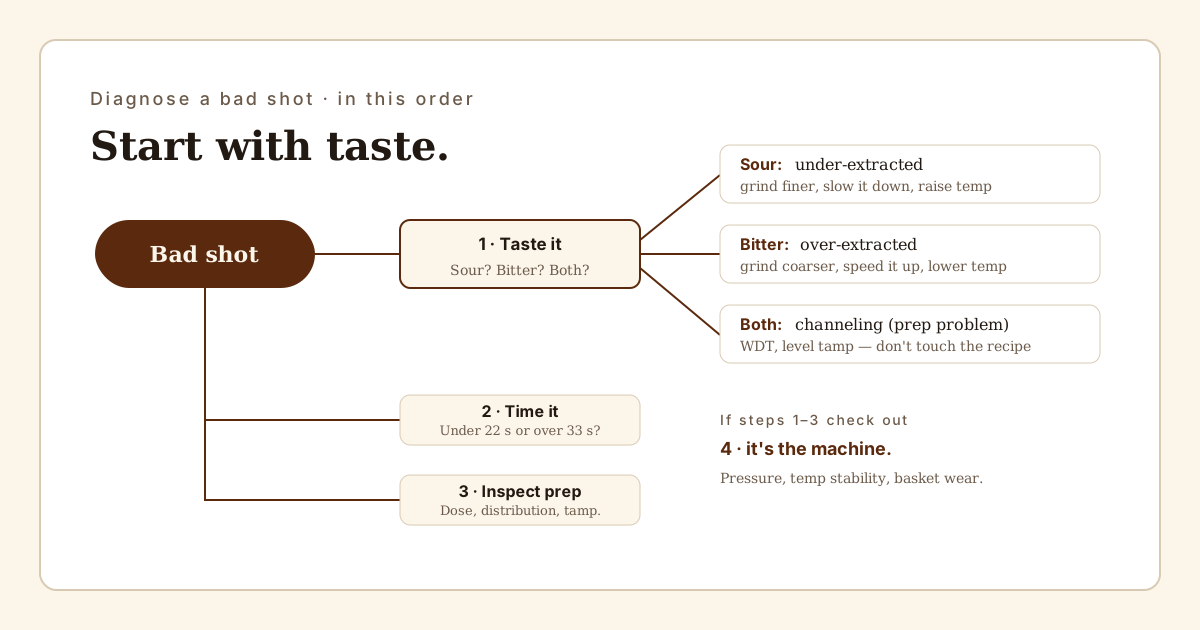
Diagnose any bad espresso shot in order: taste, then time, then prep, then machine. The branches most home baristas skip and shouldn't.
What you'll need
- A bottomless (naked) portafilter : The single best diagnostic tool in espresso. Channeling is invisible through a spouted portafilter.
- A 0.1 g scale : Diagnosing without weight data is guessing. Dose and yield both need to be measured.
- A WDT distribution tool : Eliminates clumps and density variations that cause most channeling. Cheap and high-impact.
- Fresh beans with a visible roast date : Within 6 weeks of roast. Stale beans cause symptoms that look like extraction problems and aren't.
- Backflush detergent (Cafiza or similar) : For the machine branch. A dirty group head produces shots that taste off regardless of recipe.
TL;DR
Bad espresso has four root causes: the bean, the grind, the puck prep, or the machine. Diagnose in that order, because earlier causes masquerade as later ones. Taste first (sour vs bitter vs both), then check shot time, then watch the pour through a bottomless portafilter. Most “machine problems” are actually grind or distribution problems. Most “grind problems” are actually stale beans.
How to use this tree
Run the checks in order. Each branch ends with a fix or sends you deeper. Don’t skip ahead: if you start adjusting pressure profiles before checking whether your beans are eight weeks past roast, you’re solving the wrong problem.
This tree is the diagnostic layer above the recipe layer. If you’re not yet pulling consistent shots at all, start with how to pull a perfect espresso shot for the routine, or how to dial in espresso for the new-bean adjustment process. Come back here once you have a recipe that used to work and now doesn’t.
You need three pieces of information before you start:
- What does the shot taste like? Sour, bitter, both, watery, balanced-but-something-off.
- What was the shot time? From pump-on to your target yield (typically 36 g out from 18 g in).
- What did the pour look like? Especially through a bottomless portafilter. Even spider of streams, single fast jet, donut pattern, blonding early or late.
If you can’t answer all three, you’re not troubleshooting yet, you’re guessing. Pull one more shot with a scale, a timer, and eyes on the pour.
The decision tree
Branch 1: Start with taste
Sour and thin. Under-extraction. Water moved through too fast or wasn’t hot enough. Go to Branch 2 (shot time). For the deep dive on diagnosing sour shots specifically, see why is my espresso sour.
Bitter, harsh, ashy. Over-extraction or a roast/temperature problem. Go to Branch 2 (shot time).
Sour AND bitter in the same sip. Channeling. Water found one path through the puck, over-extracting that channel while leaving the rest under-extracted. Skip to Branch 4 (pour visual).
Watery, weak, no body. Either way too coarse a grind, or the ratio is off (pulling 1:3+ when you meant 1:2), or the basket is under-dosed. Check the dose on a scale before anything else.
Balanced but “muted” or “flat.” Stale beans. 95% of the time. Check roast date; if it’s past 6 weeks, that’s your answer, no machine adjustment will fix it.
Tastes like cardboard, paper, or wet hay. Beans are oxidized (open bag too long) or your water has no minerals (RO/distilled with no remineralization). Both are common and both kill flavor independently of extraction.
Branch 2: Check the shot time
Target: 25 to 30 seconds for 1:2, from pump-on to target yield.
Under 22 seconds, tastes sour. Grind finer. One small step. Pull again.
Over 33 seconds, tastes bitter. Grind coarser. One small step. Pull again.
Time is in range (25–30s) but still tastes off. The time is a heuristic, not a verdict. Go to Branch 3 (puck prep) because a channeled shot can land in the right time window and taste terrible anyway.
Time is wildly inconsistent shot to shot (15s, then 45s, then 22s) with the same grind setting. Either your dose varies (weigh it), your distribution is inconsistent, or your grinder is retaining grounds between shots and you’re pulling yesterday’s grind. Single-dose your grinder for a week to rule it out.
Branch 3: Check the puck prep
This is where most home baristas lose six months blaming their machine.
Are you weighing the dose to 0.1 g? If not, every shot is a different recipe. Fix this first.
Are you using WDT (a needle stir) or some distribution tool? Pouring straight from the grinder into the basket leaves clumps and density variations. Clumps cause channels. Channels cause weird-tasting shots that defy grind adjustment.
Is your tamp level? Cocked tamp = thicker puck on one side = water takes the thin path. Look at the puck from the side after tamping. A torpedo-level or self-leveling tamper removes this variable for $30.
Are you using the right basket for your dose? 18 g in a 14 g basket overflows and contacts the shower screen, causing channeling at the top. 14 g in an 18 g basket leaves headspace and the puck cracks. Match basket capacity to dose within 1 g.
Branch 4: Watch the pour (bottomless portafilter)
If you don’t have a bottomless portafilter, buy one. $25. It’s the single best diagnostic tool in espresso, and it’s the reason this branch exists.
Even spider of dark streams, merging into one stream by ~10 seconds. Healthy. The shot is doing its job; if it still tastes bad, the problem is upstream (beans, grind size, ratio).
One fast jet, often light-colored, with the rest of the basket dripping. Classic channel. Re-do distribution. If it persists, your basket may have a bent or worn hole pattern.
Donut: dark ring around the edges, light or empty center. Center channel. Usually under-tamped center or a divot from a careless distribution stir.
Sprayer: water shooting sideways in multiple directions. Severe channeling, often from coarse grind plus poor distribution. Grind finer and fix prep.
Blonding starts before 15 seconds. Either grind too coarse or ratio target too high. Stop the shot earlier next time and tighten the grind.
Pour stays dark and syrupy past 30 seconds with barely any volume. Grind too fine, or you’ve packed the puck so hard it’s restricting flow (rare; tamp pressure matters less than people think). Grind coarser.
Branch 5: Now consider the machine
You only get here if Branches 1 to 4 came up clean. Most readers never need this branch.
Shots have always tasted off, since the machine was new. Check brew temperature with a Scace gauge or a thermocouple in the basket. Single-boiler machines drift 5°F+ depending on idle time; a “temperature surf” routine (flush water, wait 30s, pull) fixes most of this.
Shots got worse over weeks/months, gradually. Scale buildup, dirty group, or a tired gasket. Backflush with detergent (Cafiza). Descale if your water is hard and you haven’t in 6+ months. Replace the group gasket if it’s been over a year; they’re $5 and harden. See how to descale your espresso machine and how to clean an espresso machine portafilter for the step-by-step.
Pressure gauge reads way under 9 bar at peak. Could be a worn pump (uncommon on machines under 5 years old), a clogged OPV, or simply a coarse grind not building pressure. Rule out grind first by intentionally going much finer and seeing if pressure climbs.
Pressure gauge reads over 11 bar. OPV is set high or stuck. Adjust the OPV down to 9 bar; this is a 15-minute job on most prosumer machines and improves shot quality immediately.
Steam pressure is fine but brew is weird. On heat exchangers, an idle group cools below brew temp. Run a 5-second cooling flush before pulling. This is a workflow fix, not a repair.
Common mistakes
Adjusting the recipe to fix a channeling problem. If the shot channels, grind size and ratio can’t save it. The shot will taste sour-and-bitter at any grind. Fix prep first, then dial in.
Blaming the machine in the first month. New owners almost always have technique problems disguised as gear problems. Give it 30 days and 50 shots before suspecting hardware.
Skipping the bottomless portafilter. You’re flying blind without it. The spouted portafilter that came with your machine hides every distribution problem. $25 well spent.
Chasing one bad shot. Pull two more before changing anything. One outlier shot is normal noise; three in a row is a signal.
Treating “25–30 seconds” as the truth. It’s a starting heuristic. Light roasts often want 32–38 seconds. Dark roasts often want 20–24. Use the time to get close, then trust your tongue.
Descaling as a first move. Descaler is for actual scale buildup, not for “the shots taste off.” Descaling a clean machine accomplishes nothing and citric-acid descalers damage brass and aluminum internals if overused.
Troubleshooting
My shot tastes sour AND bitter at the same time. What’s the single most likely cause? Channeling. Water is over-extracting one part of the puck (bitter) while under-extracting the rest (sour). Don’t change grind. Improve distribution: WDT for 10 seconds, level tamp, no taps after tamping. Pull again through a bottomless basket and watch.
Everything looks fine on paper (right dose, right time, even pour) but the shot is muted and lifeless. Bean staleness or water. Check roast date first; specialty espresso peaks 7 to 21 days off roast and is fading hard by week 6. If beans are fresh, test your water: distilled or aggressive RO water produces flat, hollow shots regardless of technique. Aim for 50 to 150 ppm total hardness.
The shot pulls perfectly Monday, terribly Friday, same bag, no settings changed. Grinder drift (retention, burr alignment shifting) or bean aging. Weigh the dose; if it’s stable, the beans are moving. Tighten the grind half a step every 3 to 4 days through the life of a bag.
I’ve changed grind 10 times and nothing seems to make a difference. Two possibilities: you’re not purging the grinder after adjustments (most need 1 to 3 g to fully change size), or you have a pressurized basket that masks grind changes. Check the basket: a single layer of holes is non-pressurized; a basket with a thick plastic insert or a single pinhole at the bottom is pressurized. Replace it with a real basket.
My machine pulls a perfect shot, then a terrible one, alternating. Almost always a temperature problem on a single-boiler machine. The thermostat or PID is cycling, and you’re catching it at different points. Flush 2 to 3 seconds before each shot to stabilize, and wait 30 seconds after the heating light cycles off before pulling.
The pour starts fine but suddenly gushes blonde at 12 seconds. A channel opened mid-shot. The puck held up briefly then gave way. Usually means the bottom of the puck has a weak spot (uneven distribution at the basket floor) or you under-dosed. Re-check dose and try a gentler distribution that doesn’t dig to the bottom.
Frequently asked
What's the single most useful diagnostic upgrade?
A bottomless portafilter. It's $25 and it tells you in one shot whether your problem is prep (channeling, visible immediately) or recipe (even pour, but still tastes wrong). Without it you'll spend months adjusting grind to fix problems grind can't fix.
How do I know if it's the beans vs the technique?
Pull the same recipe on a fresh, well-known bag (a different roaster, ideally a medium roast within 3 weeks of roast date). If it tastes great, your original bag was the problem. If it still tastes bad, the issue is downstream of the beans.
Should I clean my machine before troubleshooting?
Yes, if you haven't backflushed with detergent in the last month. A gunked-up group screen affects flow distribution and adds rancid-oil flavors that mimic stale beans. It's a free baseline to establish before adjusting anything else.
My shots taste fine but my latte art is bad. Is that a shot problem?
No. Latte art is 95% milk technique. Don't change your shot recipe to fix pours. Work on milk texture (microfoam, paint consistency) and pour mechanics separately.
How long should it take to diagnose a problem with this tree?
Three to five shots, max. If you're on shot 10 still guessing, you're skipping branches or changing too many variables at once. Go back to Branch 1, pull a shot with a scale and timer and a bottomless, and write down what you observe before changing anything.
Is there any case where I should suspect the machine first?
Only if the machine is new-to-you (used purchase, untested) or if symptoms appeared suddenly after working fine for months with no other changes. Sudden gauge drops, water in the drip tray from nowhere, or a steam wand that won't pressurize are machine-first signals. Taste-based problems are almost never machine-first.